A router table can be customized to fit specific needs. Many woodworkers choose to build their own router tables or modify existing ones to suit their individual requirements. This can involve making adjustments to the size and shape of the table, adding or removing features, or incorporating specialized attachments or accessories.
One of the most common ways to customize a router table is to modify its size and shape. While most router tables are rectangular in shape, they can be made to fit a range of workspaces and tool requirements. For example, a woodworker may want to build a router table that is larger than standard dimensions to accommodate larger workpieces, or a table that is more compact for use in smaller workshops. Additionally, tables can be customized with specific work surface materials, such as MDF, laminate, or hardwood, to meet the needs of the user.
Another way to customize a router table is to add or remove features such as fence systems, dust collection systems, and guide bushings. Fences are often used to provide greater control and accuracy when making cuts, and can be customized in terms of height, width, and material. Dust collection systems are important for keeping the work area clean and preventing dust and debris from accumulating on the tool and the workpiece. Guide bushings can be attached to the table to provide a more precise and consistent cut, especially when working with complex profiles or patterns.

The ability to customize a router table is an important feature for woodworkers of all experience levels. By modifying the table to suit individual needs and preferences, users can achieve greater precision, control, and efficiency when working with the machine. With the right modifications, a router table can be a versatile and indispensable tool for a wide range of woodworking tasks.
What is the size of a typical router table?
A router table is a woodworking machine that provides a stable surface for a router to work on. It is an essential tool for any woodworking enthusiast, allowing for precise and accurate cuts on a piece of wood. The size of a typical router table can vary depending on the manufacturer, but there are some standard sizes that are commonly available. Here are some common sizes of router tables:
Benchtop router table
A benchtop router table is a compact and portable table that can be placed on any surface. The size of a benchtop router table is typically between 20 and 25 inches in length and 15 to 18 inches in width.
Floor-standing router table
A floor-standing router table is a larger and more stable table that is designed to be placed on the floor. The size of a floor-standing router table is typically between 30 and 36 inches in length and 24 to 27 inches in width.
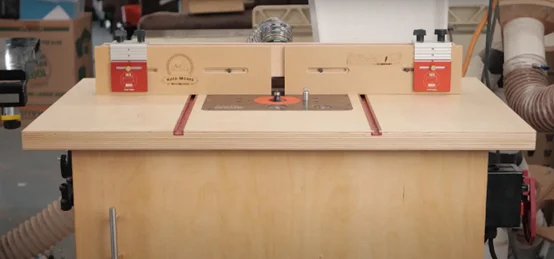
Extension router table
An extension router table is designed to be attached to the side of a table saw, providing additional workspace for routing. The size of an extension router table can vary depending on the size of the table saw it is attached to.
Cabinet router table
A cabinet router table is a large and heavy-duty table that is designed to be placed in a workshop. The size of a cabinet router table is typically between 48 and 52 inches in length and 30 to 36 inches in width.
Router table top
A router table top is a stand-alone table that can be placed on any surface. It is designed to be used with a router table fence and can be customized to fit the needs of the user. The size of a router table top can vary depending on the manufacturer, but they are typically between 24 and 36 inches in length and 16 to 20 inches in width.
In conclusion, the size of a typical router table can vary depending on the type of table and the manufacturer. A benchtop router table is usually between 20 and 25 inches in length, while a cabinet router table can be up to 52 inches in length. A router table top can be customized to fit the needs of the user, but they are typically between 24 and 36 inches in length. Choose the size of router table that best suits your needs and workspace to achieve professional-grade results.
评论
发表评论